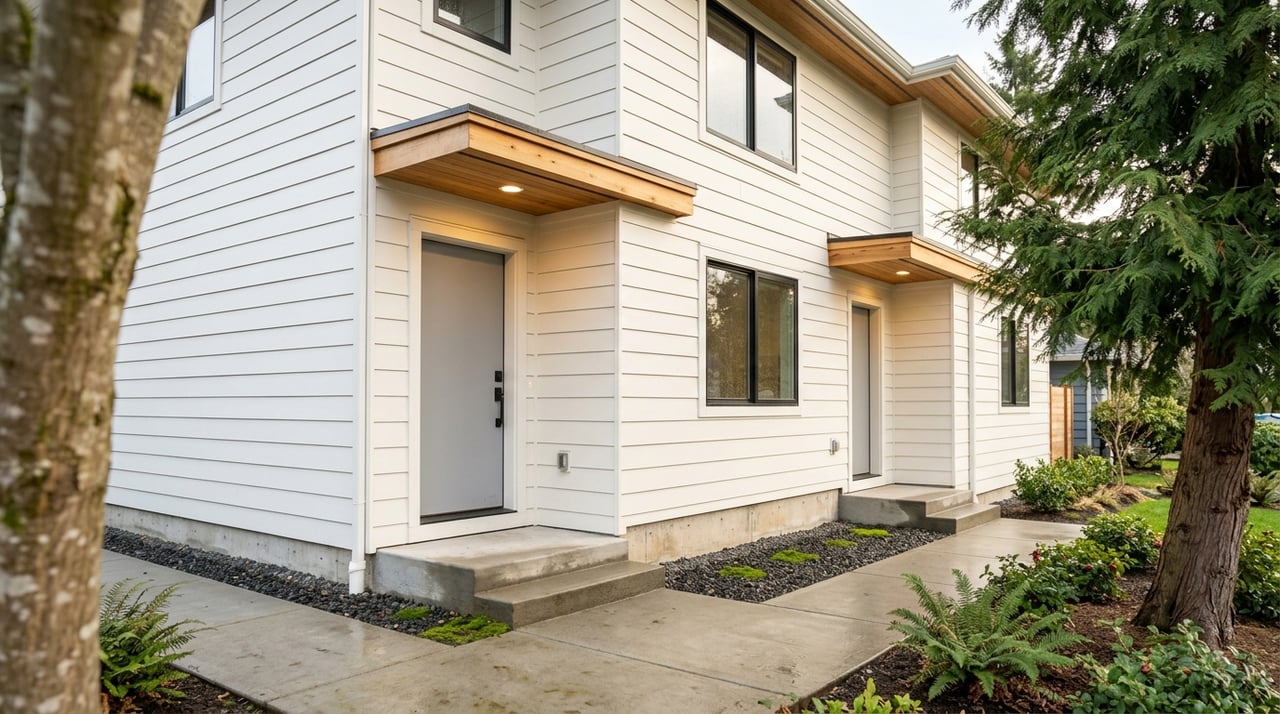
If you are looking for rental property opportunities near Portland, Clark County deserves a serious look. You may be weighing rent potential, tax differences, vacancy trends, and local rules, all while trying to avoid a deal that looks strong on paper but underperforms in real life. This guide will help you understand what makes Southwest Washington rental properties appealing, where the risks are, and how to think through an investment in Clark County with more confidence. Let’s dive in.
Clark County is not a fringe market. According to the U.S. Census Bureau’s Clark County QuickFacts, the county had an estimated population of 532,119 in July 2025, along with 196,017 households and 212,833 housing units. The same source reports a median gross rent of $1,748 and an owner-occupied housing rate of 66.4%, which helps frame the size of the local renter pool.
Vancouver is especially important because it is the county’s largest city and a major rental submarket. The City of Vancouver QuickFacts show 198,992 residents, a median gross rent of $1,702, and an owner-occupied rate of 50.8%. In simple terms, Vancouver has a more balanced owner-renter mix than the county overall, which can matter if you are targeting rental demand closer to the urban core.
The broader growth story also supports long-term interest. Clark County’s 2025 Comprehensive Plan issue paper projects a need for 103,698 net new housing units from 2023 to 2045 countywide. That does not guarantee performance for every property, but it does suggest that housing demand is expected to remain a central issue for years ahead.
A healthy rental market needs more than population growth. It also needs jobs, household income, and reasons for people to move into the area.
Clark County’s labor market profile from Washington Employment Security Department reported 189,100 jobs in December 2025 and a 5.0% unemployment rate. The largest sectors included healthcare and social assistance, government, retail trade, construction, and accommodation and food services. That kind of employment mix matters because demand is supported by multiple industries rather than one narrow employer base.
The county’s own Annual Comprehensive Financial Report adds important context. It notes advantages such as proximity to Portland, affordable land and housing, lower business costs, and a cost of living among the lowest on the West Coast. The report also says much of the county’s 2014 to 2024 population growth came from migration, which helps explain why rental demand is tied to affordability and location, not just speculation.
One of the biggest mistakes investors make is treating Clark County like a single, uniform market. In reality, rent levels, vacancy, and product performance can vary meaningfully by submarket and property type.
According to HFO’s April 2025 Clark County multifamily roundup, Vancouver 5+ unit vacancy was estimated at 7.3%. The same report cited a University of Washington survey showing county average vacancy at 4.9% in Q4 2024 and CoStar data showing 5.5% vacancy as of April 1, 2025. That range tells you something important: some parts of the market are looser than others, and newer supply can affect performance.
That same HFO report said Vancouver has become the Portland metro area’s largest submarket by unit count after a construction boom expanded inventory by 47.4% over 10 years. More supply can create more competition, especially among newer properties, but it also reflects confidence in the market’s long-term growth.
For rents, the HFO roundup reported Vancouver effective rents around $1,701. It also cited countywide averages of $1,440 for one-bedroom units and $1.69 per square foot for two-bedroom units. For you as an investor, that means underwriting should stay specific to the asset you are considering rather than relying on one average number.
Many buyers looking at Southwest Washington are really making a cross-river decision. They are asking whether a rental property in Clark County offers a better ownership setup than one in nearby Oregon markets.
The clearest difference is taxes. The Washington Department of Revenue states that Washington has no state personal or corporate income tax, while Oregon taxes personal income. If you are comparing after-tax cash flow, that difference can become a major part of the conversation.
Regulations are also worth comparing. Washington’s Landlord Resource Center says the statewide rent stabilization law sets a 2026 maximum annual rent increase of 9.683% for covered rentals, prohibits rent increases during the first 12 months of a tenancy, and requires 90 days’ written notice before a rent increase. That means your income strategy needs to be grounded in realistic turnover, renovation, and expense control.
In Oregon, the state rent stabilization rules cap annual increases at the lesser of 7% plus CPI or 10%, with only one increase in any 12-month period. Portland also adds local renter relocation assistance rules in certain situations, including some no-cause evictions, non-renewals, qualifying landlord reasons, and rent increases of 10% or more. For some investors, Clark County can feel simpler from an ownership and compliance standpoint, even though both states have landlord-tenant rules that require careful attention.
You do not need to focus only on large apartment buildings to participate in this market. Clark County offers multiple property types that can fit different budgets and strategies.
The City of Vancouver rental registration program applies to apartments, duplexes, single-family rentals, and other residential rental units inside city limits. That is a useful reminder that the investable rental universe here includes small multifamily, duplexes, and single-family homes, not just institutional assets.
For many local and first-time investors, smaller residential rentals may offer a more accessible entry point. They can also align better with residential financing options and resale flexibility. If you are a buyer who wants both income potential and a practical exit strategy, that can be appealing.
Strong rent numbers can grab your attention, but the real test is whether the property still works after vacancy, taxes, insurance, and maintenance. That is where conservative underwriting becomes essential.
HFO’s Clark County roundup reported that Vancouver operating expenses rose 51% from 2021 to 2024. The same report said insurance rose 64% over that period, while average multifamily tax increases in Vancouver from 2022 to 2025 were more than 25%. Those figures help explain why a deal can look promising on gross rent and still disappoint once real operating costs are applied.
Here is a simple public-data example. At Clark County’s median gross rent of $1,748 per month, a 4-unit property would produce about $79,709 in effective gross annual rent at 95% occupancy before expenses. That is a useful starting point, but it is only a starting point. Your actual returns depend on financing, condition, turnover, reserves, taxes, insurance, and local compliance costs.
Clark County can still offer value-add potential, but the strategy needs to be realistic. Because Washington restricts rent increases during the first 12 months of a tenancy for covered rentals, many investors rely more on unit turns, renovations, and smarter operations than on aggressive in-place rent hikes.
Using the cap-rate guidance cited in HFO’s Washington apartment market commentary, a rent increase of $300 per month on one renovated unit would add $3,600 in annual revenue. At a 5.5% to 6.0% cap rate, that incremental revenue could support roughly $60,000 to $65,455 in additional value before expenses. That is why even modest improvements can matter in a market where cap rates are often in the mid-5% to 6% range.
Cap rates should still be treated as directional, not absolute. HFO noted Class A Vancouver assets trading around mid-5% cap rates, while Class B and C assets were north of 6%. Your property’s age, location, condition, tenant profile, and expense load will all influence where it truly fits.
If your property is inside Vancouver city limits, you need to account for an added compliance layer. The city’s rental registration program says all residential rental properties within city limits must be registered annually starting January 1, 2026.
The city states registration is free through March 31, 2026, and then costs $30 per unit after that date. It also says health and safety inspections are expected to begin in mid-2027. If you are buying inside Vancouver, that should be part of your due diligence and operating-cost planning from day one.
Properties outside Vancouver city limits are not required to register under that city program. That distinction can affect how you compare opportunities across Clark County.
If you are investing in Southwest Washington rental properties, the opportunity in Clark County is real, but so is the need for discipline. The county benefits from population growth, cross-river appeal, a broad employment base, and long-term housing demand. At the same time, vacancy varies by submarket, recent construction has changed competition in Vancouver, and rising expenses can squeeze returns fast.
The best approach is to evaluate each property through a practical lens: location, rent support, expense history, regulatory obligations, and exit flexibility. That is where local guidance can make a difference, especially if you are comparing Washington options against Portland-area alternatives. If you want help identifying rental opportunities in Clark County or weighing an investment against nearby Oregon options, Green Buck Real Estate can help you make a more informed, wealth-minded move.
Address 4200 Mercantile Dr #700 Lake Oswego, OR 97035
Address 4200 Mercantile Dr #700 Lake Oswego, OR 97035