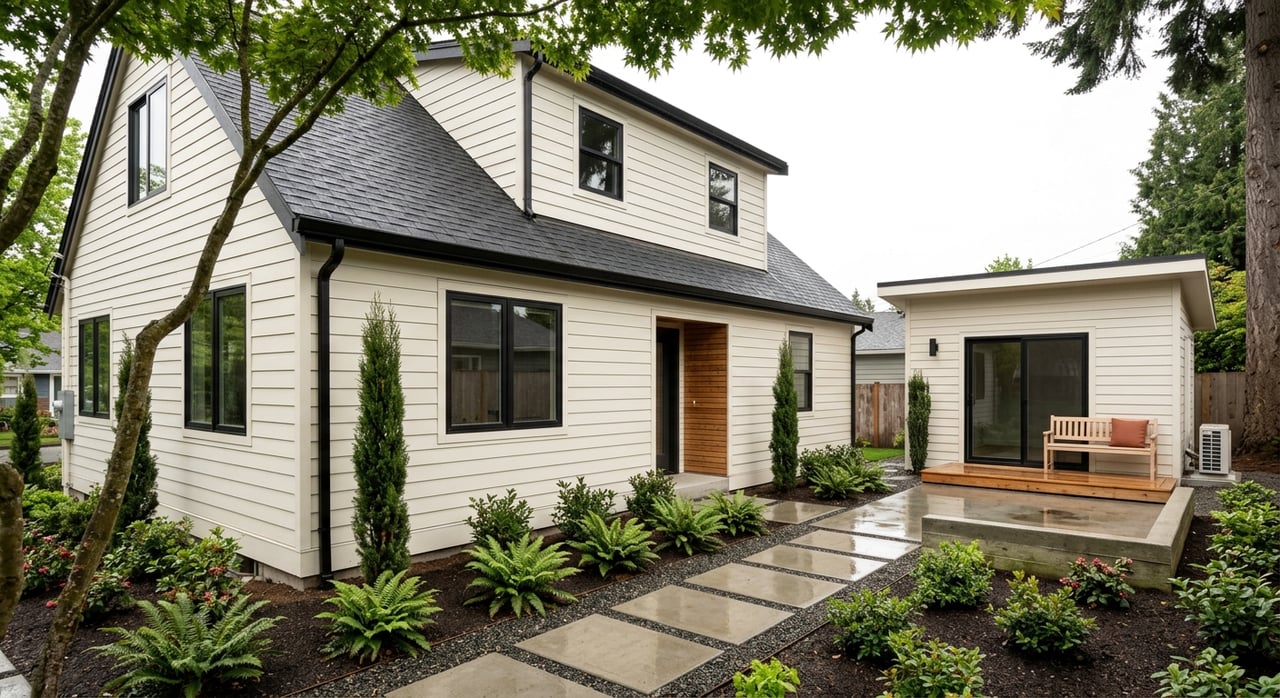
If you want your home to help pay for itself, Portland gives you more options than many buyers realize. In 97221, the mix of older single-family homes, high owner-occupancy, and established lots can create real opportunities for house hacking with an accessory dwelling unit, or ADU. If you are hoping to offset your payment, create flexible living space, or buy with future rental potential in mind, this guide will help you screen properties more confidently. Let’s dive in.
The 97221 ZIP code includes areas associated with Southwest Hills, Northwest, and West. Census-based ZIP data and Portland State University neighborhood profile data point to a housing stock with many older homes, a small vacancy rate, and a strong share of owner-occupied housing.
That matters because older detached homes often have the kinds of spaces buyers look at for ADU potential, such as basements, attics, garages, or accessory structures. In Southwest Hills, Portland State University reports 74% owner-occupied housing and a median home value of $869,000, which helps explain why buyers in this area often look for ways to add flexibility and long-term value.
Portland defines an ADU as a smaller home on the same lot as the main home, with its own living, cooking, eating, sleeping, and bathroom facilities. In simple terms, it needs to function as an independent living space, not just a finished bonus room.
The city allows ADUs in several forms. You may find one inside the main house, in a converted accessory structure, or as a detached backyard unit.
In 97221, the most practical paths often include:
For many buyers, the best opportunity is not always a fully built ADU. Sometimes it is a single-family home with the right layout, zoning, and permit path to create one legally after closing.
A home may look perfect for an ADU on a showing, but the first real checkpoint is zoning. Portland says every property has a base zone, and that base zone controls allowed uses and development standards.
Overlay zones and plan districts can add more rules. That means a promising garage, basement, or backyard structure is only part of the story.
Before you model rent, compare financing options, or estimate returns, screen the property for these basics:
Portland recommends using PortlandMaps to verify zoning and property details. The city also recommends checking permit history instead of relying only on tax records.
Detached ADUs are allowed in single-dwelling, multi-dwelling, commercial, and EX zones, but the specific standards still matter. In single-dwelling RF through R2.5 zones, a detached ADU is generally limited to 75% of the main home’s living area or 800 square feet, whichever is smaller.
There is one important exception. That size cap does not apply to a basement ADU in a primary structure that is at least five years old.
Detached ADUs must be either:
If a property cannot meet the applicable standards, an Adjustment Review may be required. That can add time and uncertainty, so it is worth flagging early in your search.
One helpful local rule is that Portland does not require extra on-site parking for an ADU. For buyers in built-out neighborhoods where lot size is tight, that can keep more properties in play.
One of the biggest risks in house hacking is assuming a space is legal just because it looks finished. A basement apartment, converted garage, or detached studio may exist physically but still lack the permits needed to count as a legal ADU.
That is why permit history matters so much. Portland specifically advises buyers and owners to verify permits rather than rely on tax records alone.
As you evaluate homes in 97221, pause when you see:
Attic, basement, and garage conversions require building permits, and electrical, plumbing, and mechanical trade permits may also be required. If the records are unclear, your next step is more due diligence, not assumptions.
In parts of 97221, topography matters. Portland notes that properties with slopes of 20% or more, or properties within landslide areas, need a soils report.
That can affect cost, timing, and feasibility, especially for detached ADUs or major structural conversion work. If you are targeting hillside properties, this should be part of your screening process from the beginning.
Some properties may have historic designations or sit in areas with added design requirements. Portland says ADUs in historic areas may need Historic Resource review if they cannot meet Community Design Standards.
That does not automatically rule a property out. It simply means you should treat design and permitting as part of the investment analysis.
House hacking is not just about rental income. It is also about understanding up-front costs before you buy.
ADU projects can trigger building permit fees, water service fees, and system development charges, often called SDCs. These line items can materially affect your budget, especially if you are comparing a home with an existing legal ADU to one that still needs conversion work.
Portland offers a separate ADU SDC waiver program. The city can waive SDCs if the owner signs a 10-year covenant agreeing not to use the ADU as a short-term rental during that period.
That is different from the city’s temporary 2025 to 2028 SDC exemption for new housing units, which does not apply to ADUs. If your strategy includes flexibility between long-term and short-term use, this is an important detail to review before making assumptions.
Multnomah County determines property taxes, not the city. The county provides property search tools for ownership, values, tax amounts, and recorded documents, which can help you build a more complete picture of a property before you commit.
In 97221, buyers usually face two paths. You can buy a home with an existing legal ADU, or you can buy a single-family home with strong conversion potential.
Each path has tradeoffs. The best choice depends on your timeline, budget, and tolerance for project risk.
| Option | Potential upside | Key caution |
|---|---|---|
| Existing legal ADU | Faster move-in and rental readiness | Verify permits and current legal status |
| Basement ADU candidate | More flexibility, and size cap may not apply in older primary structures | Requires permit review and renovation budgeting |
| Garage or accessory structure conversion | Can unlock underused space | Utility, code, and siting issues may add cost |
| Detached backyard ADU | Strong separation and privacy | Siting, slope, and fee exposure matter more |
When you are shopping for ADU-friendly homes, it helps to follow the same sequence every time. That keeps emotion from outrunning the facts.
A practical underwriting sequence in Portland is to verify zoning, permit history, slope or historic constraints, and SDC exposure before you start projecting rental income or resale value. That order can save you from overpaying for a property that looks promising but does not pencil out.
Use this short checklist when you evaluate a property:
A legal ADU can give you options that matter now and later. You might live in the main home and rent the ADU, use the ADU for household needs now and income later, or simply keep the property’s extra unit as a documented feature future buyers can understand.
Portland notes that ADUs can increase housing capacity and home value. For many 97221 buyers, the bigger advantage is flexibility across different life stages and market conditions.
In a ZIP code like 97221, finding the right house hack is rarely about scrolling for a keyword. It is about matching the home’s layout, lot conditions, zoning, and permit record with your goals, then making a disciplined decision.
That is where local, systems-based guidance can make a real difference. If you want help identifying single-family homes with ADU potential in Portland Metro, connect with Green Buck Real Estate for practical, data-informed support tailored to your search.
Address 4200 Mercantile Dr #700 Lake Oswego, OR 97035
Address 4200 Mercantile Dr #700 Lake Oswego, OR 97035