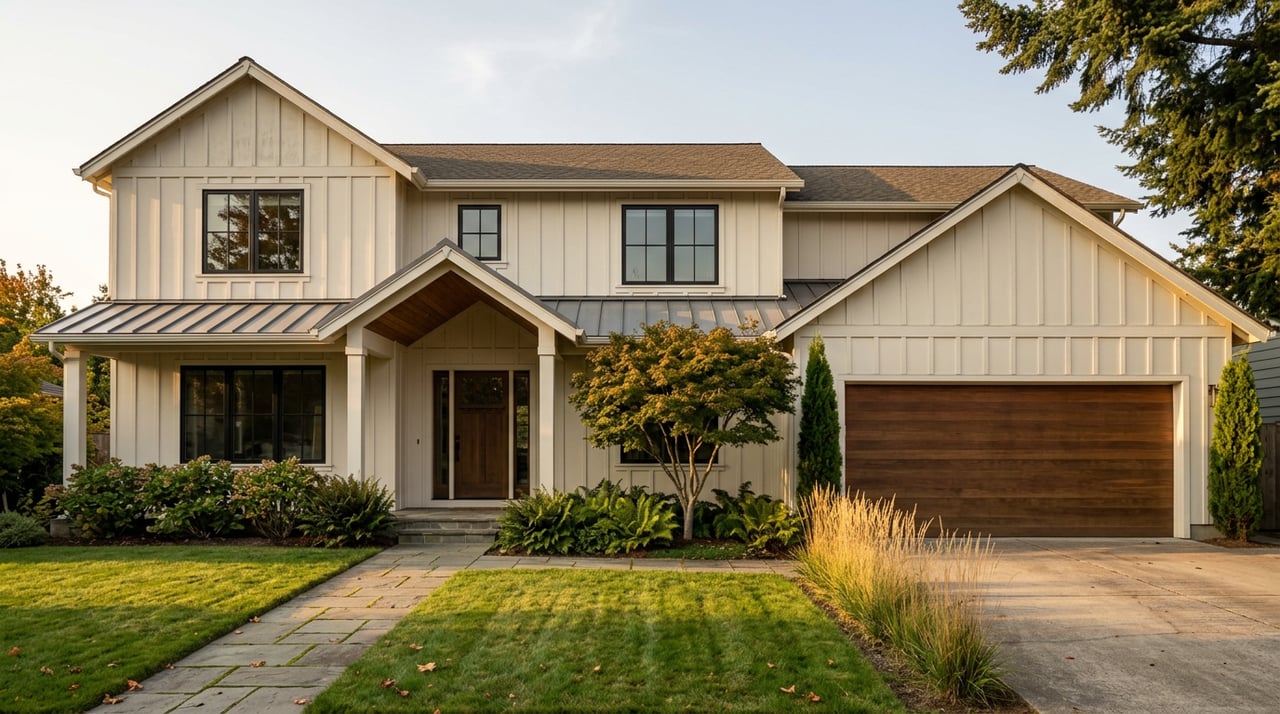
Two homes list at $600,000 the same week, both in Beaverton, both reasonably priced for their size and condition. One sits in the South Beaverton core near the 97008 corridor and draws two or three offers before the open house is even over. The other sits a few miles away on Sexton Mountain and is still on the market ten weeks later, no price change, no obvious flaw, just silence.
Rates didn't move between those two listings. Inventory didn't spike in one zip code and vanish in the other. The difference is something most market reports don't track at all: how exposed each neighborhood's buyer pool is to what's happening inside three office parks.
Beaverton is not a generic suburb with a median price and a mortgage calculator attached to it. It is a company town in the way that matters for real estate: Nike's world headquarters sits inside city limits, Intel's Hillsboro campuses are a short commute away, and Columbia Sportswear anchors a third leg of the same employment base. When those employers are hiring and paying bonuses, showings pick up almost immediately. When layoffs are coming, the market slows down before a single listing hits the MLS.
That second part is the piece worth sitting with. Nike announced in April 2026 that it would cut roughly 1,400 jobs from its global operations division, with the cuts affecting the Beaverton headquarters and landing hardest in technology roles. By the time that announcement became a news story, the internal version of it had already been circulating among employees for weeks. People don't wait for a press release to feel uncertain about their job. They hear about a reorg in a hallway conversation, sense a hiring freeze before it's confirmed, and quietly decide this isn't the year to stretch for a bigger house.
That's the mechanism. Buyer hesitation shows up in a market as fewer showings and fewer offers, not as a headline. Official housing data, the kind built from closed sales, lags that hesitation by a month or more. If you're watching median price and days on market to decide when to buy or list, you're reading a signal that's already old news to the people living inside it.
The stock market adds its own layer to this. Nike closed at $39.48 on August 25, 2026, a decline of nearly 78 percent from its record high in November 2021. For years, a chunk of Beaverton's move-up buyers financed larger down payments with vested equity and stock option payouts. That well hasn't dried up completely, but it's a lot shallower than it used to be, and buyers who once shopped on discretionary equity gains are now shopping on need alone.
Here's the part that surprises people who assume a slowdown means a crash. It doesn't, at least not in Beaverton. The households pulling back from buying are not the same households who are suddenly desperate to sell.
Most current owners in the neighborhoods most exposed to tech employment bought or refinanced at low rates years ago, carry solid equity from a decade of appreciation, and have monthly payments that don't feel urgent to escape. They sell when relocation, family changes, or lifestyle shifts push them to, not because a stock price dropped. That leaves a market with fewer buyers circling a stable pool of listings, which is a very different shape than a market correcting downward. Confidence erodes in weeks when layoffs loom. It takes quarters to rebuild once hiring resumes.
As of July 2026, Beaverton's housing market was sitting at three to four months of supply, up from the sub-one-month environment of the pandemic years but still nowhere near a buyer's market in the traditional sense. Multiple offers have become rare outside of well-priced, move-in-ready homes. Everything else lingers, and price reductions have become close to routine, with some zip codes seeing 40 to 50 percent of active listings carrying at least one cut as the calendar moves past the February-through-May peak season and into summer.
Not every Beaverton submarket carries the same exposure, and the pattern maps almost exactly onto which neighborhoods draw relocating tech workers in the first place.
| Submarket | Buyer profile | Exposure to employer cycles | What it looks like right now |
|---|---|---|---|
| Bethany | Relocating tech families, planned-unit subdivisions built from the early 1990s forward, top-rated schools | Highest | First to slow when hiring freezes, first to pick back up when it doesn't |
| Murrayhill and Cooper Mountain | Established owners in newer construction, meaningful exposure to equity compensation | High | Price reductions cluster here first when a bonus season disappoints |
| South Beaverton core, 97008 | Mixed local buyers, move-up families, fast absorption when priced right | Moderate | A well-priced $600,000 listing can still draw two to three offers in a single weekend |
| Sexton Mountain | Similar price band to the South Beaverton core, thinner and less urgent buyer pool | Moderate to high | The same $600,000 price point can sit ten weeks with no comparable pressure |
The pattern isn't confined to Beaverton's borders either. Nearby Forest Heights and Lake Oswego show the same sensitivity, which tells you this is really about buyer profile, not city limits. Wherever a neighborhood's buyers lean heavily on equity compensation from Nike, Intel, or a handful of other Silicon Forest employers, that neighborhood's absorption rate moves with corporate sentiment first and mortgage rates second.
The two-week rule still holds and it's worth taking seriously. If a home hasn't generated real interest in its first two weeks on the market, that's a pricing signal, not a marketing problem. In a market where 40 to 50 percent of listings in some zip codes already carry a reduction, waiting a month to adjust just means competing against your own price history along with every other stale listing in the same submarket.
If your home sits in Bethany, Murrayhill, or Cooper Mountain, expect your buyer pool to thin out faster than it did a year or two ago, and price accordingly from the start rather than testing the top of the range. If you're in the South Beaverton core, the fundamentals are still closer to a seller's advantage for homes that are priced and presented well. The gap between those two experiences right now is wider than the citywide median suggests.
The $750,000 to $1 million band is currently the softest in Beaverton, a direct result of the thinner move-up buyer pool described above. If you're shopping in that range, you have more room to negotiate than the headline days-on-market figure implies, especially in Bethany, Murrayhill, and Cooper Mountain.
Rates still matter at the margins. A brief dip into the low sixes earlier in 2026 brought a noticeable pickup in buyer activity, and another meaningful drop could unlock volume that's been sitting on the sidelines. But rates set the ceiling on activity. The employer calendar sets the floor, and it moves first.
One more practical note if you're buying in an older pocket of the city. A meaningful share of Beaverton's housing stock, particularly around Cedar Hills and Five Oaks, dates to the 1970s and early 1980s. Waiving inspection on a home from that era without at least a pre-inspection is one of the more avoidable risks a buyer can take in this market, regardless of what the submarket's buyer pool looks like.
Should I time my purchase around Nike's next earnings call? Not literally. The signal isn't a single event, it's a mood that builds inside these employers over weeks. What matters is understanding that a slow market in Bethany right now might reverse faster than the closed-sale data suggests once hiring sentiment shifts, and pricing your offer with that in mind rather than assuming today's softness is permanent.
I'm looking under $500,000. Does any of this apply to me? Less directly. The mechanism described here is concentrated in the move-up price bands where equity compensation and larger down payments matter most. Entry-level inventory in Beaverton tends to move on more conventional affordability factors, though overall buyer confidence still shapes how much competition you'll see for a well-priced starter home.
How do I actually track something this informal? You don't need insider access. Watching which zip codes are accumulating price reductions month over month, and noticing whether that's concentrated in the tech-adjacent neighborhoods or spread evenly across the city, tells you almost as much as the internal chatter does. It just arrives a few weeks later.
Beaverton's market rewards buyers and sellers who understand which submarket they're actually in, not just the citywide average. If you want a read on how your specific neighborhood is behaving right now, Green Buck Real Estate offers a free home valuation that accounts for exactly this kind of submarket-level detail.
Address 4200 Mercantile Dr #700 Lake Oswego, OR 97035
Address 4200 Mercantile Dr #700 Lake Oswego, OR 97035