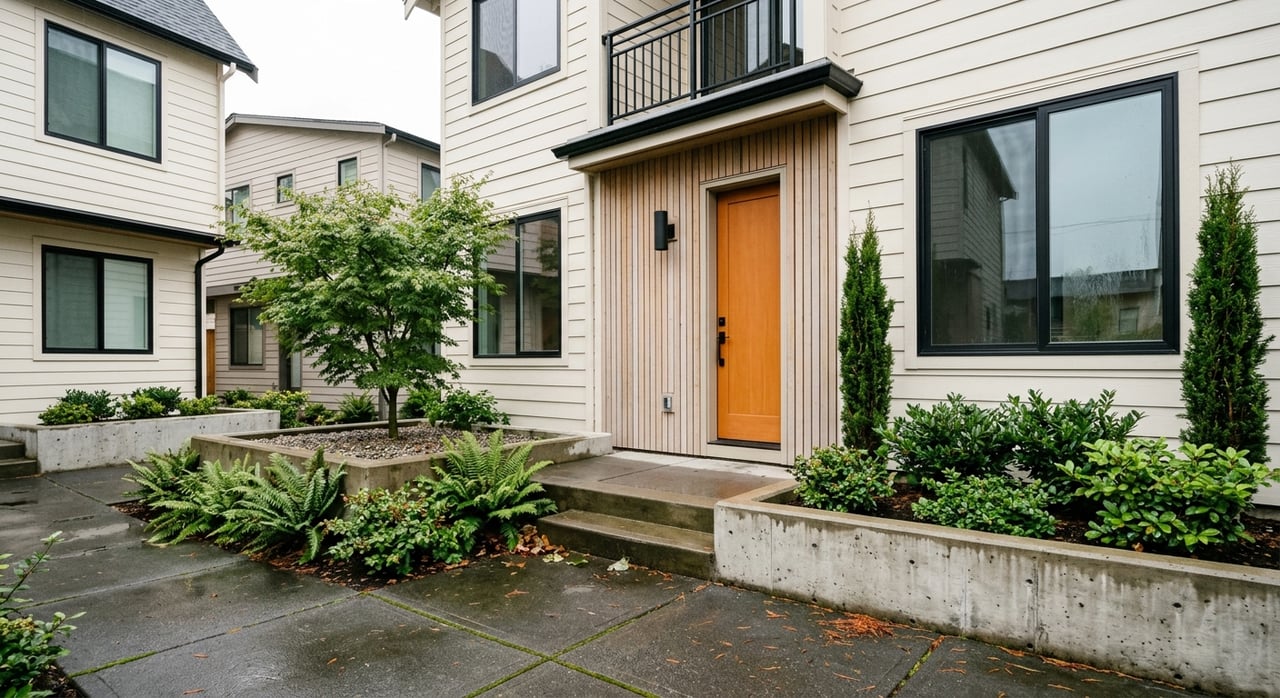
Buying your first home in Beaverton can feel like a choice between affordability and compromise. The good news is that condos and townhomes often give you a practical way into the market without taking on the full cost and upkeep of a detached house. If you want a clearer picture of pricing, monthly costs, HOA rules, and what to watch before you make an offer, this guide will walk you through it. Let’s dive in.
For many first-time buyers, attached homes offer a lower entry point than detached homes in Beaverton. Current listing snapshots show about 147 condos and 140 townhomes for sale, with condo examples ranging roughly from $180,000 to $455,000 and townhome examples from about $298,000 to $514,900. That matters in a city where the median listing home price is around $519,900.
Attached homes also fit the way many buyers want to live. In central Beaverton, redevelopment and transit access make condos and townhomes especially appealing if you want a lower-maintenance home with easier commuting options. Downtown Beaverton and Beaverton Central stand out because of the Transit Oriented Area and access to the Beaverton Transit Center, which serves the MAX Blue Line, MAX Red Line, and WES Commuter Rail.
If you are starting your search, compare several Beaverton submarkets instead of assuming prices are similar across the city. Common search areas for attached homes include Central Beaverton, Five Oaks, Murray Hill, and the 97006, 97007, and 97008 corridors. These areas can have meaningful price differences even within the same property type.
That is one reason your search should focus on both lifestyle and numbers. A condo near transit in central Beaverton may offer a different mix of convenience, dues, and amenities than a townhome farther out. Looking at multiple submarkets side by side helps you understand where your budget stretches furthest.
A condo is a legal form of ownership in Oregon. You own your individual unit and also share an undivided interest in the common elements, which may include the roof, siding, foundations, stairways, utility services, landscaping, and parking areas. The association and its governing documents set the rules and responsibilities tied to those shared components.
A townhome describes a home style, not always the ownership structure. In Oregon, townhouses are separate dwelling units that often extend from foundation to roof and are often individually owned. Even so, a townhome can still be part of an HOA and come with dues, community rules, and shared-maintenance obligations.
For you as a buyer, the practical question is not just what the home looks like. It is also how ownership works, what the HOA maintains, and how much control you will have over maintenance and use of the property.
One of the biggest advantages of attached living is shared maintenance. Depending on the community, common elements can include building exteriors, roofs, siding, landscaping, parking areas, and utility services. Condo fees may also cover common areas, water, sewer, trash, and some recreational amenities.
That can make ownership feel more predictable from a maintenance standpoint. Instead of handling every exterior repair on your own, you are contributing to a shared system. The tradeoff is that you are paying monthly dues and giving up some autonomy.
A lower sticker price does not always mean a cheaper home to own. HOA or condo dues are usually paid separately from your mortgage servicer, and they can range from a few hundred dollars per month to more than $1,000. You should factor those dues into your budget from day one.
This is where many first-time buyers get tripped up. A lower-priced condo with high monthly dues can end up costing about the same per month as a more expensive home with no HOA dues. The better way to compare homes is to look at your total monthly housing cost, not just the asking price.
Your full monthly budget should include:
Insurance for condos and some townhomes is not the same as insurance for a detached house. In many multi-unit buildings, the association’s dues help pay for a master insurance policy that covers common areas. That does not mean your individual unit and belongings are fully covered.
You should expect to need your own unit-owner policy, often called an HO-6 policy. Before you buy, find out whether the master policy covers only common areas or whether it includes any part of the unit interior. That detail can affect both your monthly costs and your risk exposure.
Special assessments are one of the most important budget risks in attached-home ownership. If a building or community needs major repairs and reserves are not strong enough, owners may be asked to pay additional amounts beyond regular monthly dues. These costs can be significant.
This is why a condo with low dues is not automatically a great deal. If the HOA has weak reserves or major repairs coming up, your future costs could rise quickly. It is smart to ask about current assessments, past assessments, and whether any major work is planned.
Before you move forward, spend time on the HOA documents. In Oregon, the association’s declaration, bylaws, and other records shape your rights and responsibilities. These documents also help you understand whether the community is financially healthy and well-managed.
Focus on reviewing:
These papers can tell you a lot about the true cost of ownership. They can also help you avoid surprises after closing.
Reserve funds are not just a nice bonus. Under Oregon law, condo boards must determine reserve needs annually by conducting a reserve study or updating an existing study. That gives buyers an important window into whether the association is planning responsibly for big-ticket repairs.
A healthy reserve fund can reduce the chance of sudden large assessments. It can also support future resale, since lenders and buyers often look closely at a project’s financial condition. If reserves are thin and deferred maintenance is building up, that can become a financing issue later.
A home inspection still matters when you buy a condo or townhome. It gives you a general visual examination of the property’s physical condition and can help you identify issues early enough to negotiate or back out if needed. For a first-time buyer, that step is still essential.
But an inspection only tells part of the story with attached homes. Your inspector may focus mainly on the interior of the unit, while the HOA may be responsible for other components like roofs, siding, exterior stairs, or shared systems. That is why your due diligence should include both the inspection report and the HOA documents.
With condos especially, lenders do not look only at your finances. They may also review the project itself. Special assessments, insurance problems, critical repairs, and unresolved deferred maintenance can affect whether a condo project meets financing standards.
That matters now and later. If you buy into a project with financial or maintenance problems, future buyers may face the same lending hurdles when you decide to sell. In other words, the health of the community can affect your resale path almost as much as the condition of your unit.
For eligible first-time buyers in Oregon, the Oregon Housing and Community Services FirstHome program may be worth exploring. The program offers first-mortgage financing plus 4% or 5% down payment assistance, and it can be used for eligible property types that include condos and planned unit developments. Homebuyer education is required for first-time buyers.
Programs like this can make attached homes even more reachable. If you are close on savings but still building your down payment, it may help to review whether you qualify and how the monthly payment would look with dues, insurance, and taxes included.
The right choice depends on what you want your first home to do for you. If you want lower maintenance, a potentially lower barrier to entry, and access to central Beaverton or transit-connected areas, a condo or townhome could be a smart fit. If you want more control over exterior maintenance and fewer shared rules, you may prefer a detached home even if it means waiting longer.
In Beaverton, this decision often comes down to tradeoffs. Attached homes can offer a practical entry point in a market where citywide prices are higher, but they also ask you to be comfortable with dues, shared decision-making, and HOA oversight. When you compare options carefully, you can make a choice that fits both your current budget and your longer-term plans.
If you want help comparing Beaverton condos and townhomes with a clear eye on monthly cost, HOA risk, and resale potential, the team at Green Buck Real Estate can help you navigate the numbers and find the right fit.
Address 4200 Mercantile Dr #700 Lake Oswego, OR 97035
Address 4200 Mercantile Dr #700 Lake Oswego, OR 97035